Army Combat Fitness Test (ACFT)
ARMY COMBAT FITNESS TEST EVENTS
TWO-MILE RUN (2MR)
Run two miles for time on a measured, generally flat outdoor course.
The run event measures aerobic endurance, which is required for conducting continuous operations and ground movements on foot. Higher aerobic endurance allows the body to recover quickly in preparation for executing other physically demanding tasks that may arise during a ground movement, such as reacting quickly to enemy contact.
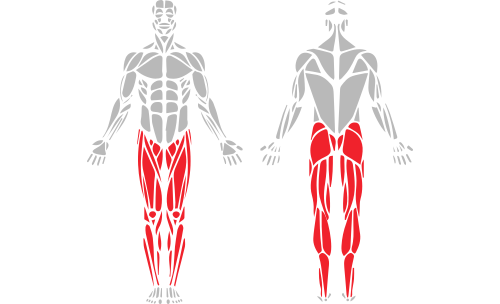
LEG TUCK (LTK) OR PLANK (PLK)
LEG TUCK: Complete as many leg tucks as possible; maintain a relative vertical posture while moving the hips and knees up and down without excessive swinging.
PLANK: Maintain a proper plank position for as long as possible
The LTK assesses the strength of the Soldiers grip, arm, shoulder and trunk muscles. These muscles assist Soldiers in load carriage and in avoiding injuries to the back.
The PLK is an alternate assessment that may be used. The plank helps build core strength that promotes back health and helps reduce injuries.

SPRINT-DRAG-CARRY (SDC)
Conduct 5 x 50 meter shuttles for time - sprint, drag, lateral, carry and sprint
The SDC is a test of strength, endurance, and anaerobic capacity, which are needed to accomplish high intensity combat tasks that last from a few seconds to several minutes.
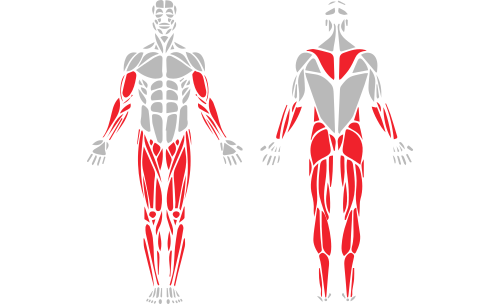
HAND RELEASE PUSH-UP - ARM EXTENSION (HRP)
Complete as many Hand-Release Push-ups as possible in two minutes
The HRP is an upper body endurance test that represents repetitive and sustained pushing used in combat tasks.
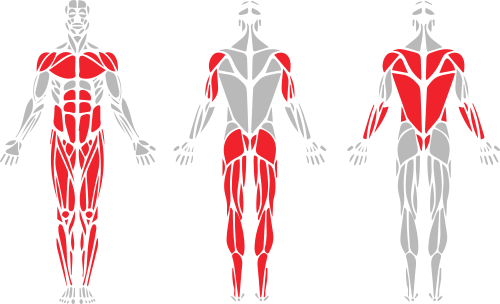
STANDING POWER THROW (SPT)
Throw a 10-pound medicine ball backward and overhead for distance.
The SPT event represents tasks requiring quick explosive movements to maneuver equipment and personnel.

3 REPETITION MAXIMUM DEADLIFT (MDL)
Deadlift the maximum weight possible three times.
The MDL event represents movements required to safely and effectively lift heavy loads from the ground, jump, bound and tolerate landing. It requires well-conditioned back and leg muscles and helps Soldiers to avoid upper and lower back injuries caused by moving long distances under heavy load.

Comments
Post a Comment